
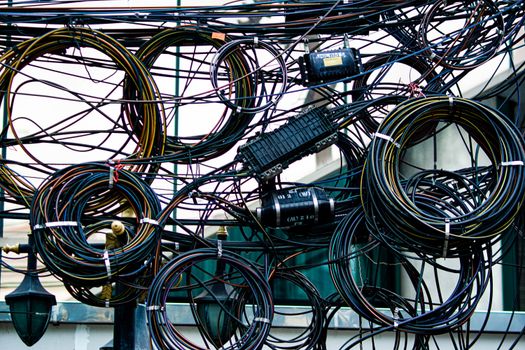
You walk into the back office to grab a file and pass the server rack. The door is hanging open. A tangle of blue cables spills out like a bird’s nest. Dust coats every surface. One drive light is blinking red, but nobody flagged it. The owner says everything is fine. He checks the network every morning, sees the Wi-Fi working, and calls it good. But that rack is a silent thief.
Here is what is really happening behind that closed door. Every time a tech has to troubleshoot a connection, they spend twenty minutes tracing cables because nothing is labeled. When a switch fails, the new person starts from zero. Cables pressed against power supplies trap heat, degrading hardware months ahead of schedule. And one accidental bump can take down the whole network. The cost is not a dramatic crash. It is a thousand tiny cuts that bleed time and money.
The Daily Friction That Adds Up
Unmanaged IT infrastructure does not announce itself. It shows up as a five-minute delay when a printer does not connect, a ten-minute search for a lost file, a fifteen-minute reboot that everyone expects by now. Professionals waste an average of 22 minutes per day dealing with IT-related issues, according to a Robert Half survey cited by 7tech. That number sounds small until you multiply it.
Take five employees losing 20 minutes each per day. That is 100 minutes of wasted labor daily, or more than eight hours every week. Over a month, you lose more than a full employee’s time—paid but producing nothing productive. Over a year, that quiet erosion of focus and output can equal tens of thousands of dollars in lost productivity. And that is just the human cost.
The Hidden Price of Unmanaged Hardware
Outdated hardware is one of the biggest hidden costs for small businesses. You might keep a five-year-old server running because it still turns on. But that server is consuming more electricity, requiring more frequent repairs, and running slower than modern equipment. Each failure triggers an emergency call with premium rates. The cost of reactive break-fix models adds up fast. Proactive IT management reduces unplanned IT spending by 25% to 35% annually, according to entremt.com. That is a direct savings that never appears on a single invoice, but it reshapes your budget.
When Chaos Becomes Catastrophe
The messy rack does not just slow things down. It creates conditions for real outages. Unmanaged cables trap heat. Heat kills electronics. A hot switch that fails might be a twenty-minute fix, but it also takes down the entire office. The average cost of IT downtime is $5,600 per minute, according to Gartner data cited by multiple sources. For small businesses, unplanned outages cost between $8,000 and $20,000 per hour depending on size and industry. A single eight-hour outage could cost $64,000 to $160,000. One wrong pull on a loose cable can trigger that.
And downtime is only half the picture. Data breaches are a growing threat. 43% of cyberattacks target small businesses, yet 36% of small businesses do not worry about cyberattacks, and 59% of those without cybersecurity believe they are too small to be a target. The global average cost of a data breach reached $4.45 million in 2024 (IBM). For small businesses, that cost falls between $2.9 million and $3.5 million. More than half of small businesses that suffer a cyber attack close within six months. Meanwhile, 87% of small businesses hold customer data that is at risk of theft or damage.
The Hidden Inventory of Small Costs
Beyond the visible hardware, hidden IT costs lurk in subscriptions and contracts you forgot you had. Redundant services, hidden vendor coordination fees, emergency service charges, and surprise out-of-scope fees all quietly drain your budget. A vendor charges a coordination fee to talk to another vendor. An emergency service call after hours costs three times the standard rate. An urgent server upgrade that was never budgeted becomes an unbudgeted expense. These charges are easy to miss when you have no centralized IT oversight.
Employee turnover also triggers hidden IT costs. When a person leaves, their passwords, files, and permissions are often tangled. A new hire needs new equipment, software licenses, and time to set up accounts. If nothing is documented, the setup takes longer and creates more friction. Compliance oversights add penalties. Utility bills for running old, inefficient equipment keep climbing.

Why Proactive IT Management Stops the Drain
The solution is not to wait for the next disaster. It is to open the rack, document everything, label every cable, and standardize the environment. Proactive management means monitoring hardware health, patching vulnerabilities, and planning for upgrades before they become emergencies. When every connection is mapped and every device is tracked, troubleshooting takes minutes instead of hours. A new technician can look at the documentation and understand the setup immediately. Cables are organized to allow airflow, reducing heat and extending hardware life.
This approach reduces unplanned spending by 25% to 35% annually. It also prevents the slow daily friction that costs hours every week. And it eliminates the surprise costs of emergency services and redundant contracts.
Cabala Consolidated: Your IT Partner for Stability
Cabala Consolidated is a local, veteran-owned IT services company based in Bartlesville, Oklahoma. We serve small to medium-sized businesses that need more than just break-fix support. We are the team that opens your server rack, assesses the mess, and builds a plan to make it right. We label every cable, document every device, and monitor everything proactively. Our managed IT support covers helpdesk, network management, endpoint security, Microsoft 365 administration, backup, and disaster recovery. We do not just fix problems. We prevent them.
If you are tired of IT problems that show up as slow days, angry customers, or surprise bills, give Cabala Consolidated a call. We will show you what is really costing your business and stop the drain.

Frequently Asked Questions
What are hidden IT costs?
Hidden IT costs are expenses that are not obvious on a standard invoice or budget. They include lost employee time due to slow systems, redundant software subscriptions, emergency service charges, vendor coordination fees, and the cost of running outdated hardware. These costs accumulate gradually and are often overlooked until they become a significant budget drain.
How much does IT downtime really cost a small business?
For small businesses, unplanned outages cost between $8,000 and $20,000 per hour depending on industry and size. The average across all businesses is $5,600 per minute, according to Gartner. An eight-hour outage could cost a small business $64,000 to $160,000, not including lost customer trust.
Can proactive IT management actually save money?
Yes. Proactive IT management reduces unplanned IT spending by 25% to 35% annually. It prevents downtime, eliminates emergency repair costs, and extends the life of hardware. By monitoring systems and planning upgrades in advance, businesses avoid the most expensive type of IT expense: the emergency fix.
How do I know if my business has hidden IT problems?
Look for signs like frequent slow-downs, employees complaining about tech issues, unlabeled cables or messy server rooms, surprise IT bills, and no documentation of passwords or network setups. If you do not have a clear picture of your IT environment, you almost certainly have hidden costs that are dragging your business down.